Often switch between a Mac and PC? Want to use one USB flash storage device for both? The thing is that by default, these platforms use different file systems – discs are formatted differently. Windows uses NTFS, and Mac OS uses HFS, these file systems are not compatible with each other. However there is a simple solution – you can format the drive to FAT32 or exFAT that performs better than FAT32. In the resulut, your external hard drive will work just fine with Mac and Windows.
You can format your external hard drive from either the PC or Mac. Just keep in mind if you want to use your drive also for OS X’s Time Machine backups, we advise you to format your drive through Mac because there is an additional step to make drive compatible with “Time Machine Backups”. And you can only do this with exFAT as with FAT32 Mac OS X’s Time Machine backup won’t work.
FAT32 or exFAT?
You can format your external hard drive in both – exFAT and FAT32. They both will work just fine. Mac and PC can read and write on both. However, each of these filesystems has their own pros and cons. FAT32 has a maximum 4GB file size limit, but exFAT can work with files as large as 16EB, that’s more than you will ever need. If you have to work with large video clips, games or any other kind of massive files, FAT32 may not be the best choice. Many still choose FAT32 over exFAT despite its slower performance, as it’s also compatible with Linux Os and is supported on many gaming consoles.
Once you have done with formatting, your external hard drive will be able to write and read files from both a PC and Mac. The resulting FAT32 file system will be compatible with all versions of Mac OS X, and Windows including Windows 10 back to 95. This is one of the most widely recognized file system formats.
- FAT32 – a file system normally used on USB disks
- exFAT – a newer file system optimized for flash devices and has improved performance overFAT32
Now, click on the top partition, name it 'Windows,' and change its format to MS-DOS. Then click the second partition, name it 'Mac,' and change its format to Mac OS Extended (Journaled).
Why I can’t use NTFS on Mac?
The default file system for Windows is NTFS (New Technology File System). Macs that run Snow Leopard or Lion can read data from drives that are formatted as NTFS. However, they can’t write. To make your Mac compatible writing on NTFS you have to get and install a third-party driver. So in the end, it’s possible to make your NTFS external hard drive compatible with Mac. But we advise to just format it to “FAT” file system as it’s less time consuming and easier.
Windows 7 can’t read nor write files to external drives that are formatted as HFS. To do so you also have to install third-party software like Paragon HFS+ for Windows.
How to format an External Drive in Windows
1)Connect the drive to your Windows PC.
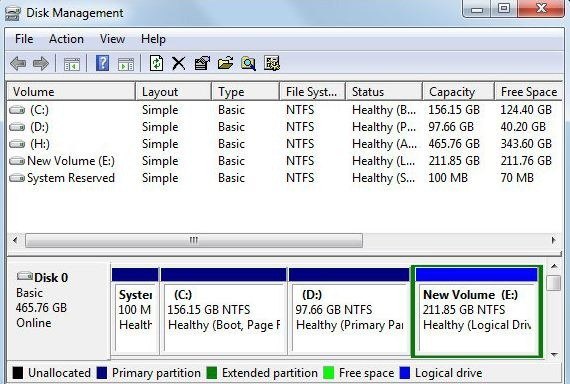
2) Open Disk Management.
3) Right click on unallocated or any other disk partition and select “New Simple Volume”
4) Choose your desired size
5) Assign your external hard drive with any letter.
6) Choose exFAT as the file system.
7) Follow the instructions and at the end click “Finish“
How to Format an External Drive in OS X
1) Connect your external hard drive to the Mac.
2)Open Disk Utility. You can do this quickly by pressing CMD and the spacebar at the same time. Then type in “Disk Utility”.
3) Select the drive you want to format.
4) Click the Partition tab.
How To Format A External Drive For Mac And Pc
6)Change the Partition Layout from Current to 1 Partition.
7) Click Options, SelectMaster Boot Record, and click OK.
8)Name the hard drive with a name of your choice.
9)Click the Format drop-down menu.
10) Select exFAT or MS-DOS FAT(FAT32).
11) At last press Apply, then click onPartition.
Hello.
WD My Book would be best for desktop, Seagate Backup Plus Slim would be one of the best portable hard drives. Both are all-around decent drives and will do fine for any backup, pictures included.
As for cross-platform encryption, if you intend to use the same drive on both Mac and Windows, the best option would be using a cross-platform compatible encryption tool, like VeraCrypt, while formatting the drive in exFAT to avoid compatibility issues. This is because Windows won’t recognize Mac’s native encryption and vice versa. VeraCrypt is well-renowned, so it should function well without any problems, just be prepared to learn how to use the tool. Try testing this setup with just a couple files before you perform entire backups.
by Shirly Chen, 2018-04-17
The best way to reset an USB flash drive to factory status or fix logical error is formatting the USB flash drive. Do you know how to format USB flash drive? For most of us, it is very simple. But, are you sure you have selected the right method to format the USB flash drive? Maybe, you are wrong. In this article, we will show you two methods to format USB flash drive on PC/Mac. You can select the right one to format your USB flash drive.
1. Format USB flash drive with system utility
If you are a Windows user, you can connect the USB flash drive with your PC. Then open 'My Computer', find the USB flash drive, right-click the icon of the USB flash drive, you can see the format option. Then you can easily format the USB flash drive with this tool.
If you are a Mac user, you just need to open Mac Disk Utility. Then connect the USB flash drive with your Mac. You also can quickly format the USB flash drive with this system utility.
This is the easiest way to format an USB flash drive on PC or Mac. But, the data which is formatted in the USB flash drive still can be recovered by free data recovery software. It means you or anyone else can easily recover the formatted or lost data from the USB flash drive which has been formatted by system utility. It is not safe if you are going to sell, donate or lend your USB device to other people.
2. Format USB flash drive with DoYourData Super Eraser
DoYourData Super Eraser is a super data erasure & disk formatting tool for both Windows OS and Mac OS. It can help you quickly format USB flash drive and permanently erase data on the USB flash drive. It means once the USB flash drive is formatted by DoYourData Super Eraser, all data information on the USB flash drive will be permanently erased, can’t be recovered by any data recovery method.
>Download DoYourData Super Eraser here:
How to use DoYourData Super Eraser to format USB flash drive on PC or Mac? Actually, it is pretty simple. First of all, just run this data erasure software from Launchpad (if you are a Mac user). Then follow the steps below to format your USB flash drive and permanently erase all data on the USB flash drive.
Step 1: Connect the USB flash drive with your computer. Then run DoYourData Super Eraser on your computer.
>Step 2: Choose mode 'Wipe Hard Drive'.
>Step 3: Select the USB flash drive and click on 'Wipe Now' button to format and erase the USB flash drive.
>Once the process gets finished, the USB flash drive will be formatted and all data information on the USB flash drive will be permanently erased. Pease back up your important data before you use DoYourData Super Eraser to format your USB flash drive.
>The two methods above can help you easily format USB flash drive. We strongly recommend you to use the second method to format the USB flash drive before you sell, donate, give away or dispose it. It is the safe way to format the USB flash drive and permanently erase private data.
Related Articles
Recommended Products
Super Eraser
Permanently erase files, folders, data from hard drive and storage media, beyond the scope of data recovery.
DownloadSuper Eraser for Mac
Permanently and securely erase data from Mac, hard drive or storage device under Mac OS.
Download
